

Best Freelance Websites for Beginners in 2026

Best Freelance Websites for Beginners

Starting freelancing sounds simple until you actually try to find your first client. There are dozens of freelance websites available, and each one works a little differently. Some let you apply directly to projects, while others let you create services that clients can purchase. Some are better for writers and designers, while others are more suitable for developers, marketers, or professional consultants.

The good news is that you don’t need to join every platform you find. The better approach is to understand how each website works and choose one or two that match your skills, experience, and preferred way of working.

In this guide, we’ll compare 10 of the best freelance websites for beginners in 2026, including what each platform is best for, its advantages and limitations, and the type of freelancer who may benefit most from it. The goal is to help you make a practical choice rather than simply give you a long list of websites.

Key Takeaways

  • The best freelance website depends on your skill, experience, and the type of work you want to find.
  • Beginners can start with general platforms such as Upwork and Fiverr, while writers, creatives, and other specialists may benefit from more focused options.
  • You don't need to join all 10 platforms. Starting with one suitable website and building a strong profile is usually a better approach.

What Are Freelance Websites and How Do They Work?

Freelancing is just one of several ways to earn online. If you’re still comparing different options, see our guide to How to Make Money Online in 2026.

Freelance websites are online platforms that connect independent professionals with people or businesses looking for specific services. Instead of working as a permanent employee for one company, you provide your skills on a project, hourly, or service-based basis.

For example, a business might need someone to write five blog posts, design a website, edit videos, manage social media, or create product descriptions. Instead of hiring a full-time employee, the business can find a freelancer who already has the required skill.

The way you find that work depends on the platform.

On marketplaces such as Upwork, freelancers generally create a profile and can apply for projects posted by clients. Upwork also supports predefined services through its Project Catalog.

On Fiverr, the process is more service-based. Freelancers create specific services, known as Gigs, and potential customers can browse those services and place orders.

Other websites work more like job boards or professional networks. For example, LinkedIn can help freelancers find opportunities and connect directly with businesses rather than relying entirely on a traditional freelance marketplace.

This difference matters because the platform that works well for one freelancer may not be the best choice for another.

How We Chose the Best Freelance Websites

There is no official list of the “best” freelance websites because the right platform depends heavily on the person using it.

For this guide, we looked at several practical factors instead of simply choosing the biggest names.

Beginner-friendliness

A platform should be reasonably understandable for someone who has never freelanced before. Complicated systems aren’t necessarily bad, but beginners need to know what they’re getting into.

Types of freelance work

Some platforms cover everything from writing and design to programming and marketing. Others are more focused on particular types of professionals.

How you find clients

This is one of the biggest differences between platforms. Some require you to actively apply or submit proposals, while others allow clients to discover and purchase your services.

Fees and costs

Freelancers should understand how much of their earnings they actually keep. Platform fees can change, so always check the current pricing information before making financial decisions.

For example, Upwork currently states that its freelancer service fee ranges from 0% to 15% per contract, with the exact rate shown before a proposal or offer is finalized.

Competition

A website can have thousands of potential clients and still be difficult for a new freelancer if the competition is intense. We therefore consider not only the size of a platform but also how useful it can be for someone without a long track record.

Range of users

We also considered whether a platform can work for people in different countries and for different skill levels.

The result is a balanced list rather than simply a ranking based on popularity.

10 Best Freelance Websites for Beginners in 2026

Freelance Website Best For Beginner Fit Pricing Model
Upwork Professional projects Good Service fee
Fiverr Packaged services Very Good Commission
Freelancer Project bidding Good Project / membership fees
Contra Creatives & portfolios Good Varies
PeoplePerHour Projects & hourly work Good Service fees
Guru Professional services Good Service fees
ProBlogger Job Board Bloggers & writers Very Good for writers Job-board model
FlexJobs Remote & flexible jobs Good Paid membership
Truelancer Global freelance work Good Service fees
LinkedIn Direct clients & networking Good Mostly free

Note: Platform fees, pricing plans, and features can change. Check each platform's current official pricing before signing up or accepting work.

1. Upwork

Upwork Homepage

Upwork is one of the most established freelance marketplaces and covers a huge range of professional services, including writing, design, programming, marketing, customer support, virtual assistance, and more.

Its biggest advantage is variety. If you have a marketable skill, there’s a reasonable chance you’ll find projects related to it.

The trade-off is that you generally need to be proactive. You create your profile, search for relevant projects, and submit proposals. That means simply creating an account won’t bring clients automatically.

For bloggers and writers, Upwork can be particularly useful because you can look for blog writing, SEO content, copywriting, editing, and content strategy projects.

Upwork is free to join, although freelancers generally pay a service fee from their earnings, and most proposals require Connects.

Best for: Beginners who want access to a wide range of freelance projects.

2. Fiverr
Fiverr takes a different approach from proposal-based marketplaces.

Instead of searching through projects and applying to each one, you create specific services that customers can discover and purchase. These services are called Gigs.

For example, a beginner writer might create a service for blog writing, product descriptions, or proofreading. A designer could offer social media graphics or YouTube thumbnails.

This model can be easier to understand when you’re starting out because your service, price, and deliverables can be clearly defined.

However, getting discovered can still take time. You’re competing with many other sellers, so a narrow service, strong portfolio samples, and clear presentation matter.

Fiverr’s current model also means freelancers should account for the platform’s commission when setting their prices. This guide notes that freelancers receive 80% of the offered price on completed orders.

Best for: Beginners who want to sell clearly defined services.

3. Freelancer
Freelancer Homepage

Freelancer offers projects across areas such as writing, translation, design, programming, marketing, and data-related work.

The platform uses a bidding model for many projects, meaning freelancers can review available work and submit offers to clients.

It also supports contests, which can be useful for certain creative fields such as design.

One advantage of Freelancer is the sheer variety of projects. The downside is that large marketplaces can also bring significant competition, so beginners shouldn’t expect every application to produce a response.

Freelancer’s current fee structure varies by project type and membership arrangement, so check its official fee page before pricing your work.

Best for: Beginners looking for a broad project marketplace.

4. Contra
Contra Homepage

Contra has a more modern, portfolio-oriented approach to freelancing.

It’s particularly interesting for designers, writers, developers, marketers, and other creative professionals who want their work to be a major part of their online presence.

Rather than treating your profile as just a list of skills, the platform puts more emphasis on showing what you’ve actually created.

That’s useful because clients often want evidence before they hire someone. A strong portfolio can communicate your ability much faster than a long list of claims.

The important limitation is that a platform cannot create demand for you. Even if the platform itself is easy to use, you still need good work and a way to attract potential clients.

Best for: Creatives and freelancers who want a portfolio-focused platform.

5. PeoplePerHour
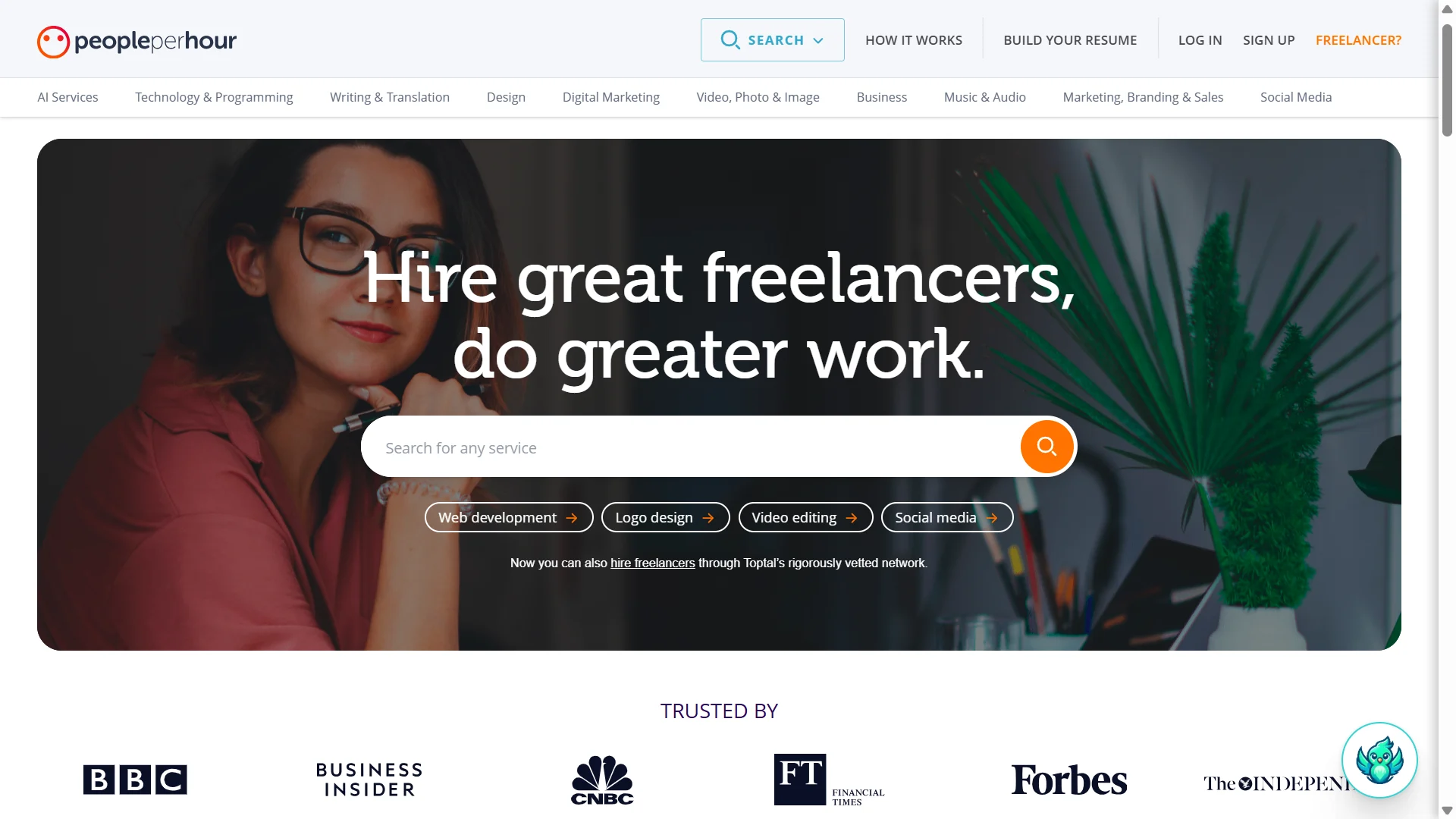
PeoplePerHour Homepage

PeoplePerHour connects businesses with freelancers across areas such as writing, design, marketing, programming, and other digital services.

The platform supports both hourly work and fixed-price projects, giving freelancers flexibility in how they structure their services.

For someone who prefers clearly defined projects rather than long-term employment, this can be useful.

As with other marketplaces, however, your results will depend heavily on your profile, portfolio, pricing, and ability to communicate what you can actually deliver.

Best for: Freelancers offering project-based or hourly services.

6. Guru
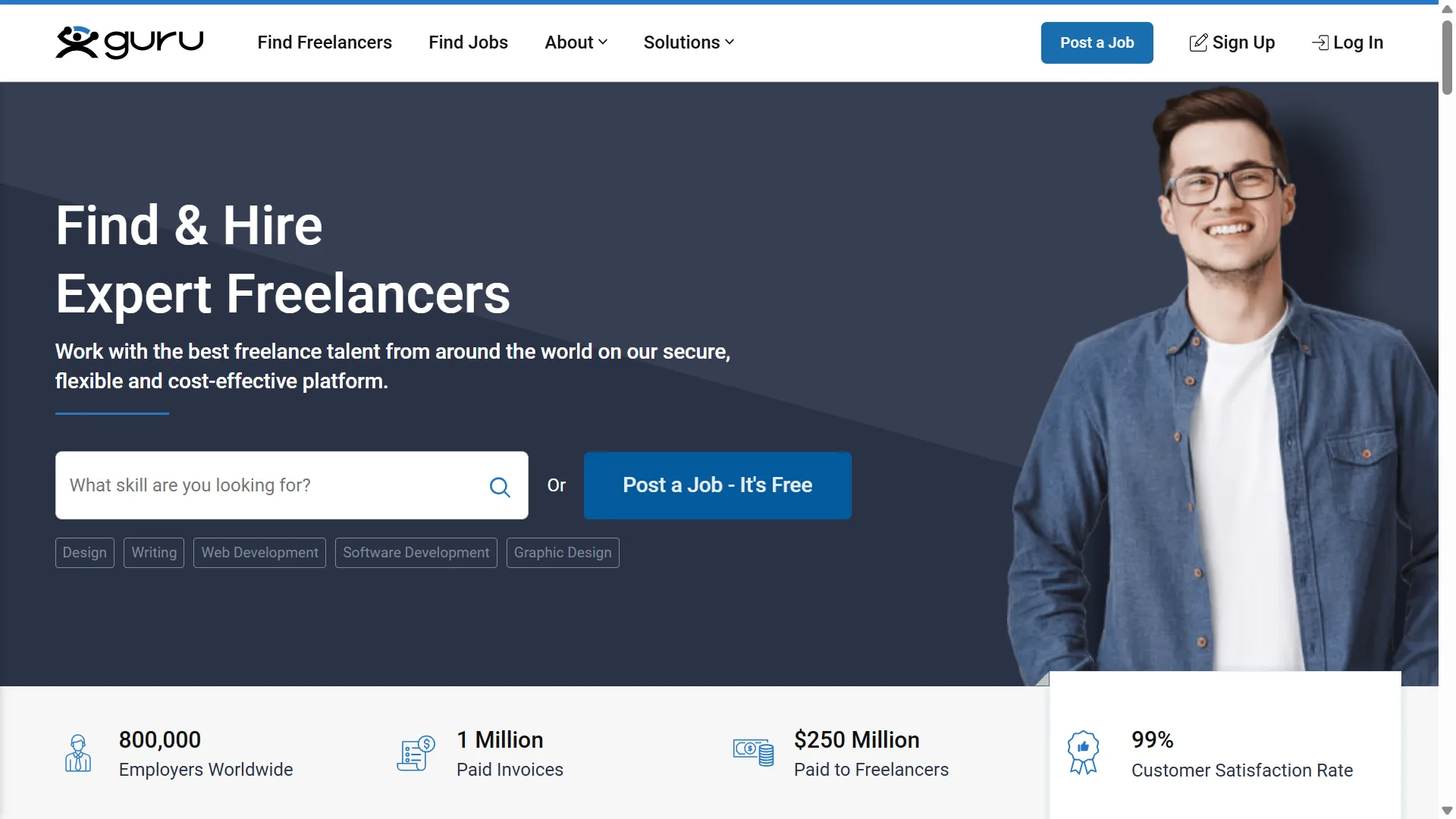
Guru Homepage

Guru is another established freelance marketplace covering areas such as programming, writing, administration, design, marketing, and business services.

Freelancers can create profiles, browse projects, and submit quotes for work. Guru also provides different membership options and payment features for freelancers.

One useful feature is that the platform supports both short-term and longer-term projects, which can be valuable once you start building relationships with clients.

For beginners, the main challenge is the same one you’ll encounter on most marketplaces: having an account isn’t the same thing as having clients.

Your profile needs to make a clear case for why a client should choose you.

Best for: Freelancers looking for professional project work.

7. ProBlogger Job Board
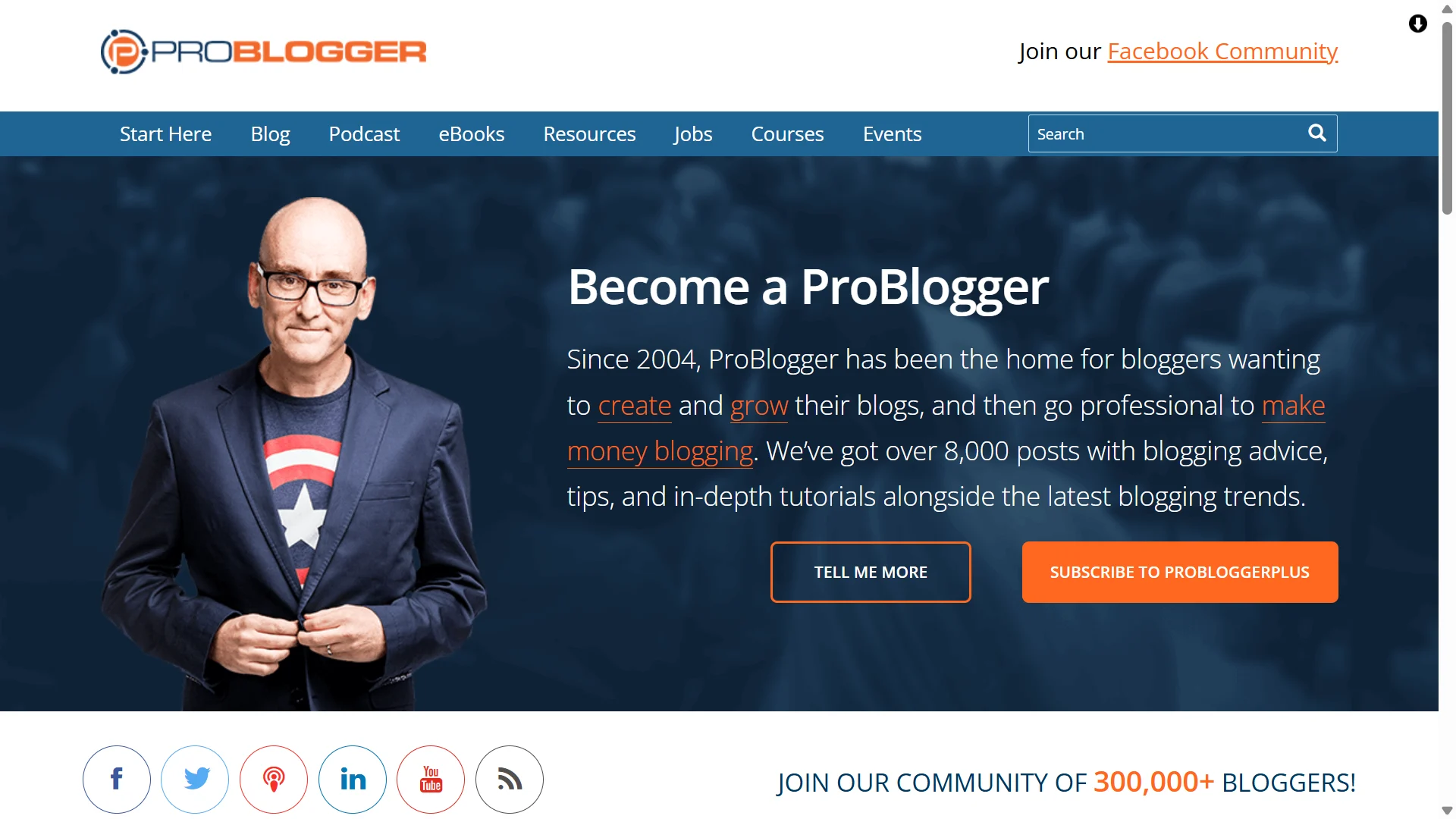
Problogger Website

ProBlogger Job Board is the most specialized option on this list.

Unlike general freelance marketplaces, ProBlogger focuses heavily on blogging and content-related opportunities.

That makes it particularly relevant to the audience of this website.

If you can write blog posts, edit articles, create content strategies, or work in related areas, a specialized job board can sometimes be more relevant than scrolling through thousands of unrelated freelance projects.

Freelance writers can also use AI carefully for brainstorming, research, and editing. See our guide to Best AI Writing Tools for Bloggers for tools that can support the writing process.

The trade-off is obvious: the platform is much narrower. If your skill is web development, video editing, or virtual assistance, you’ll probably find more relevant opportunities elsewhere.

Best for: Bloggers, content writers, and freelance writers.

If you’re interested in building your own blog alongside freelance writing, our guide on How to Start a Blog in 2026 walks you through the process from the beginning.

8. FlexJobs
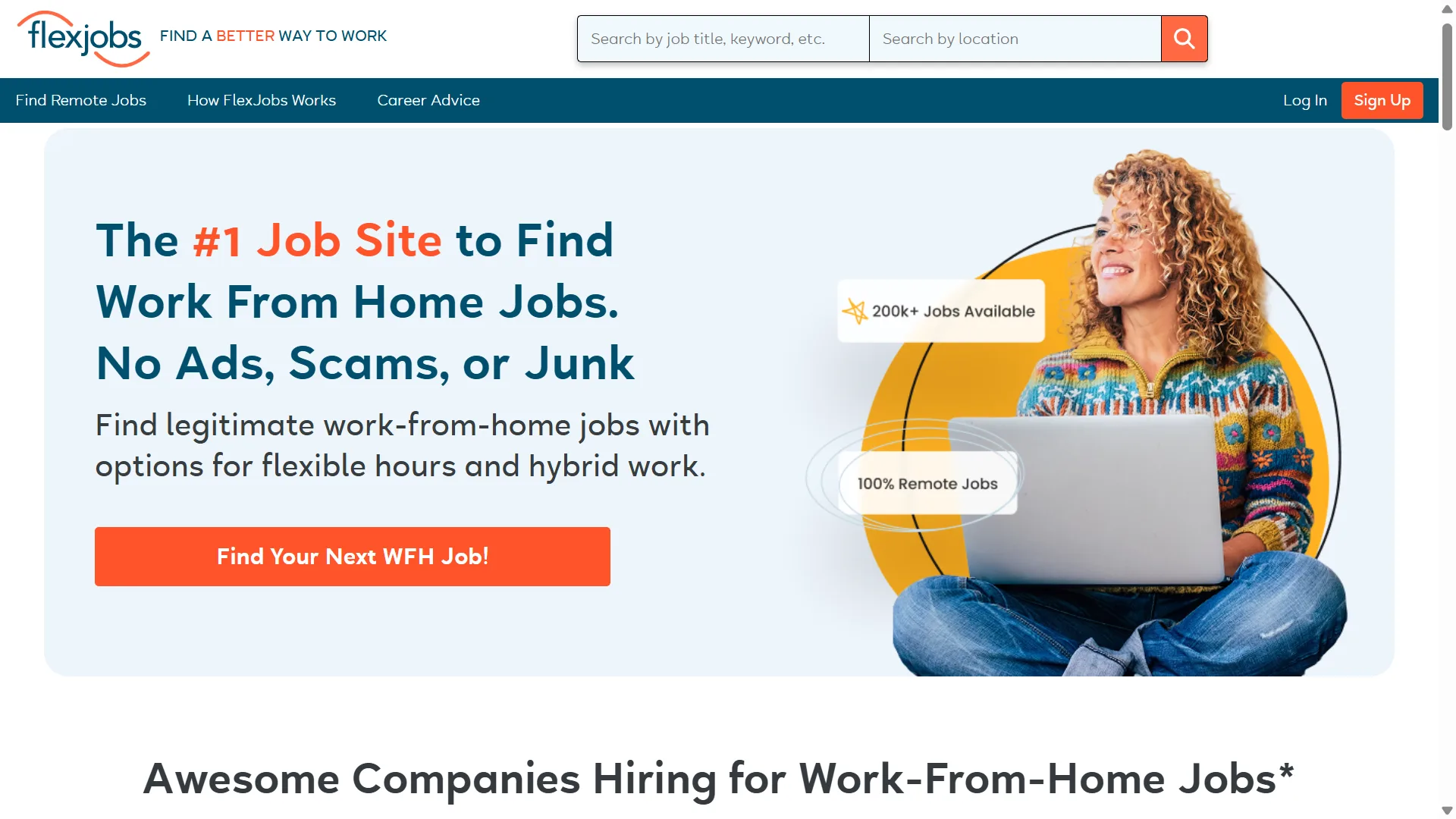
Flexjobs Homepage

FlexJobs is somewhat different from the typical freelance marketplace.

It focuses on remote and flexible job opportunities, including freelance, part-time, and full-time positions. Its listings cover areas such as writing, marketing, customer service, education, administration, and more.

One of its main selling points is its emphasis on screening job listings.

The important downside for beginners is that FlexJobs uses a paid membership model for job seekers, so it isn’t the same as joining a completely free marketplace and browsing indefinitely.

That cost may be worthwhile for someone actively looking for vetted remote opportunities, but it makes the platform less attractive if you’re simply experimenting with freelancing.

Best for: People looking for vetted remote and flexible work.

9. Truelancer
Truelancer homepage

Truelancer is a global freelance marketplace covering services such as writing, programming, design, data entry, marketing, and virtual assistance.

It can be particularly worth considering for freelancers who want an additional marketplace beyond the largest platforms.

For Indian freelancers and other international users, having access to platforms with a global client base can expand the number of opportunities available.

Still, don’t make the mistake of joining a platform simply because it appears on a list. Look at the jobs available for your specific skill first. If you search the platform and consistently find very few relevant projects, there’s little reason to spend significant time building a profile there.

Best for: Freelancers looking for another global marketplace.

10. LinkedIn
LinkedIn Homepage

LinkedIn isn’t a traditional freelance marketplace, but it deserves a place on this list because freelancers can use it to find opportunities without depending entirely on marketplace bidding.

A strong LinkedIn profile can function as a professional portfolio. You can publish examples of your work, connect with business owners, respond to relevant job posts, and make potential clients aware of your services.

For example, a freelance writer could share useful posts about content marketing while displaying writing samples on their profile. A business owner who needs that service may discover the freelancer without the freelancer applying to a traditional marketplace project.

The biggest advantage is that you’re building a professional network rather than relying entirely on one platform’s marketplace.

Best for: Building direct relationships with potential clients.

Which Freelance Website Is Best for You?

There’s no single winner for everyone.

If you’re a complete beginner and want to package a simple service, Fiverr can be a straightforward place to start.

If you’d rather actively search for projects and send proposals, Upwork is worth considering.

If you’re a blogger or writer, ProBlogger, Upwork, and Fiverr are more directly relevant.

If you’re a designer or other creative professional with a strong portfolio, Contra may be worth exploring.

If you want remote and flexible employment-style opportunities rather than only freelance marketplace projects, FlexJobs is a different option.

And if your long-term goal is to build relationships with clients directly instead of depending on marketplace algorithms, LinkedIn can be valuable.

Choose one platform that matches your skill and working style. Give it enough time to understand how clients behave there, improve your profile based on what you learn, and then decide whether another platform is worth adding.

How Much Does It Cost to Use Freelance Websites?

Most major freelance websites let you create an account for free, but that doesn’t necessarily mean freelancing through them is completely free.

Platforms can make money through freelancer commissions, client fees, paid memberships, proposal credits, payment processing, or optional promotional features.

For example, Upwork currently charges freelancers a variable service fee of 0%–15% per contract, while most jobs also require Connects when submitting proposals.

Freelancer also has its own freelancer fee structure, which varies according to the type of project and other factors.

Fiverr uses a different model in which freelancers receive 80% of the offered price according to its marketplace model.

Never pick a platform just because the signup button says “Free.”

Before accepting work, check the platform’s current fee page and calculate what you’ll actually receive after applicable charges.

Common Freelancing Mistakes Beginners Should Avoid

The biggest beginner mistake is assuming that joining a freelance website is the same as starting a freelance business.

It isn’t.

Joining too many platforms

Creating profiles on 10 websites may feel productive, but it can quickly become a distraction.

It’s usually better to build one strong profile than maintain 10 unfinished ones.

Offering everything

If your profile says you are a writer, designer, developer, marketer, video editor, translator, data-entry specialist, and virtual assistant, a client may struggle to understand what you’re actually good at.

Start with one clear service or a closely related group of services.

Competing only on price

Being the cheapest freelancer isn’t a sustainable strategy.

A client who chooses you only because you’re cheaper can easily leave when someone offers an even lower price.

Instead, focus on clear communication, useful samples, reliability, and a specific service.

Having no portfolio

You don’t necessarily need years of professional experience to create a portfolio.

You can create sample projects yourself.

For example, if you want to offer blog writing, create two or three high-quality sample articles. If you want to design social media graphics, create a small set of realistic sample designs.

Show people what you can do instead of only telling them.

Expecting instant income

This is probably the most important reality check.

Your first few weeks may produce very little or even nothing.

That’s not necessarily a sign that freelancing doesn’t work. You may simply need better samples, a clearer service, better proposals, or more experience.

Freelancing becomes easier when you stop thinking only about getting paid once and start thinking about building proof that you can consistently deliver good work.

Final Thoughts

The best freelance website isn’t necessarily the one with the biggest number of users or the longest list of available jobs. It’s the one that gives your particular skill a realistic path to finding the right clients. A writer, designer, developer, and virtual assistant may all choose different platforms and that’s perfectly fine.

If you’re completely new to freelancing, don’t make the process harder than it needs to be. Pick one platform that fits your skill, create a focused profile, prepare a few strong samples, and learn how that platform actually works before jumping to another one. You don’t need to build a perfect freelance career on day one.

And if you’re exploring freelancing as one part of a larger plan to make money online, don’t stop at choosing a platform. Building useful skills, creating your own online presence, and developing multiple income opportunities can give you more control over the long term. Start small, learn from your first projects, and build from there.

Frequently Asked Questions (FAQ)

Which freelance website is best for beginners?

There isn’t one universal answer. Fiverr can suit beginners who want to sell predefined services, while Upwork can be better for people who prefer actively applying for projects. Your skill and preferred working style should determine the choice.

Can I start freelancing without professional experience?

Yes. You can create sample projects to demonstrate your abilities before you have paid clients. However, don’t pretend that sample work was created for a real client. Be honest about your experience.

Which freelance website is best for writers and bloggers?

ProBlogger is specifically relevant to blogging and writing, while Upwork and Fiverr provide broader opportunities for writers and content creators.

Can I freelance from India and work with international clients?

Many global freelance platforms accept freelancers from multiple countries, but availability, payment methods, taxes, and verification requirements can vary by location. Always check the current rules for your country and the specific platform.

Do freelance websites charge fees?

Many do. Some take a percentage of your earnings, while others may charge for proposals, memberships, or additional services. Always check the current fee structure before accepting work.

How many freelance websites should I join?

You don’t need to join all of them. Starting with one suitable platform is often more manageable. Once you understand what works for you, you can consider adding another.

Can I freelance part-time?

Yes. Many people start freelancing alongside college, employment, or other responsibilities. The key is to choose a workload you can realistically complete without sacrificing quality.

Leave a Comment